Most visitors to the St. George area hear about Zion, Snow Canyon, and Sand Hollow. They miss Red Cliffs National Conservation Area entirely. That is a mistake. This 45,000-acre BLM-managed preserve sits right off I-15 between St. George and Leeds. It offers red sandstone waterfalls, dinosaur tracks, Ancestral Puebloan pit houses, and quieter trails than the big-name parks nearby.
For RV travelers basing out of a park near Washington or St. George, the Red Cliffs National Conservation Area is a high-value day trip. It is one of the best options in the region. The main recreation area sits about fifteen minutes from the Washington exit of I-15. Most of the best trails are short, family-friendly, and offer real desert geology without the Zion crowds. The catch is that this place was not designed with big RVs in mind, and the access points punish travelers who did not do homework.
This guide walks through what makes Red Cliffs worth the detour, which trails match which fitness levels, and how to structure your day. It also covers the parking, water, and logistical details that matter when your rig is eleven feet tall. By the end you will know whether to drive in yourself or tow with a smaller vehicle.
Why Red Cliffs National Conservation Area Deserves a Day
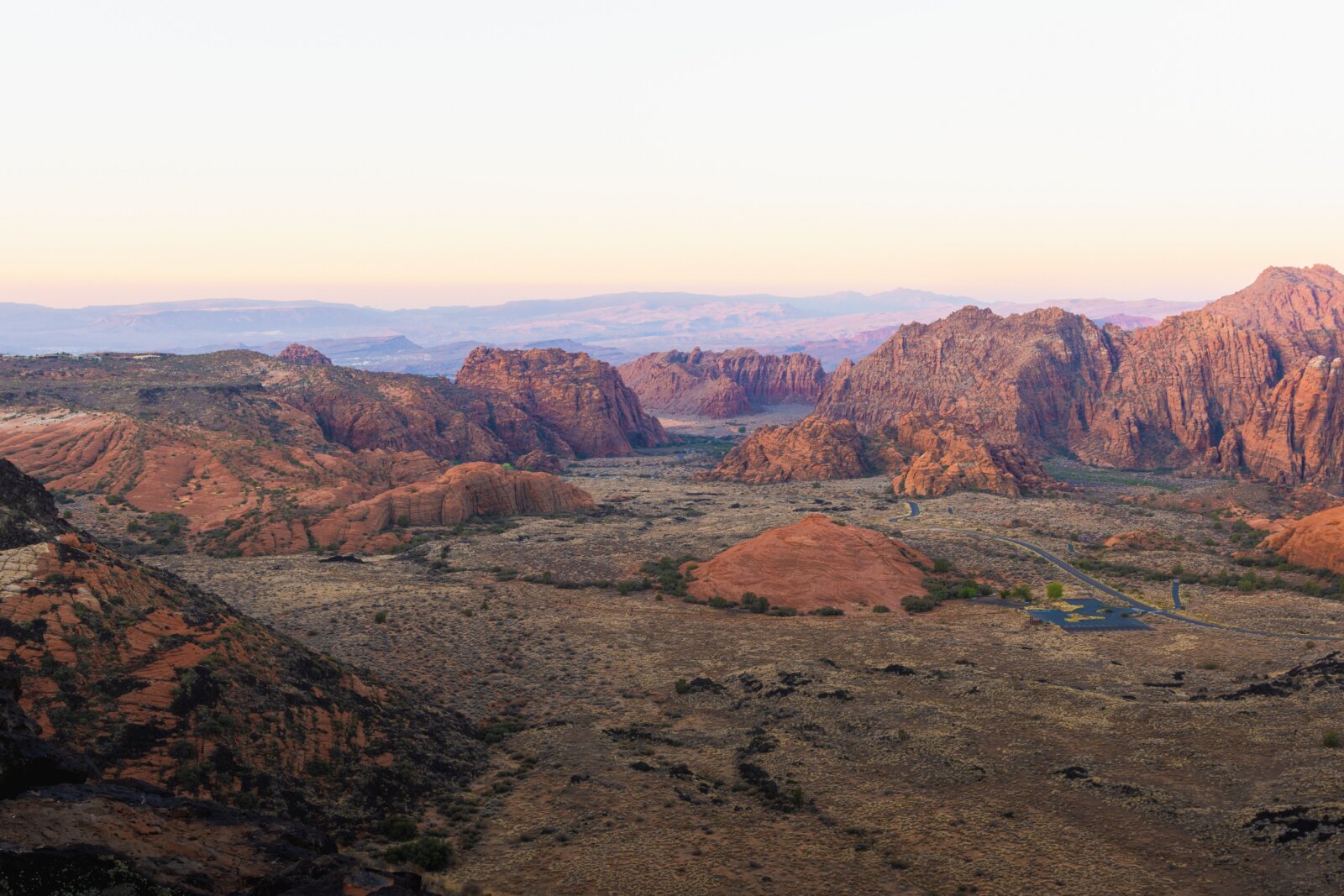
Red Cliffs National Conservation Area sits in the overlap between the Mojave Desert, the Great Basin, and the Colorado Plateau. That rare meeting produces a landscape you do not find in the national parks just up the road. Red Navajo Sandstone cliffs rise straight out of scrubby desert floor. Jurassic-era dinosaur tracks are preserved on open slickrock. Ancestral Puebloan ruins sit under interpretive boardwalks. All of this is under an hour from a long list of rv parks southern utah travelers already use as basecamps.
The flagship feature is the Red Reef Trail. The first six-tenths of a mile follow a sandstone canyon along a seasonal creek. Short pools and modest waterfalls appear in spring when snow melts off the Pine Valley Mountains. Cottonwood trees shade the canyon floor.
At about half a mile, you reach a pour-off where most casual hikers turn around. Beyond that point the route becomes a serious scramble. There are carved toe-holds and a fixed rope, so families and senior travelers should treat the pour-off as the destination.
Red Cliffs also holds one of the best kid-friendly educational stops in the region. The Red Cliffs Dinosaur Track Site on the Silver Reef Trail preserves seventeen tracks roughly 190 million years old. The trail is a short walk of about three hundred yards with a modest slickrock climb. The tracks are right there on the rock, no fossil hunting required. Pair it with the Anasazi Trail for a half-day that combines prehistoric reptiles with Ancestral Puebloan ruins.
The quieter side of the conservation area matters too. Compared to the shuttle lines at Zion or the parking crush at Sand Hollow, Red Cliffs stays calm even in peak season. That is part of its value for anyone building a week of things to do in st george utah that are not overrun. You can hit Red Reef in the morning and drive ten minutes back to town for lunch. There is still time for a second stop before dinner.
Trails at Red Cliffs National Conservation Area for Every Fitness Level
Not every trail at Red Cliffs works for every visitor. Knowing the difficulty before you drive out matters, because some trailheads require backing out of tight parking if the hike is too much. Here is how the main options break down by effort.
For easy hikes, the Anasazi Trail is the clear winner. The loop runs about half a mile on a mostly flat path with interpretive boardwalks over the ruins. It is BLM-rated “easiest” and is reasonable for kids, seniors, and anyone recovering from harder days on the trail. The Silver Reef Trail to the dinosaur tracks is similarly short, about three hundred yards one way. It has a brief steep slickrock climb that most mobile visitors can handle.
For moderate hikes, Red Reef to the pour-off is the answer. The path is hard-packed sand and slickrock with gentle grades for the first half mile. Elevation gain is around six hundred feet total round trip. Turn around at the pour-off and you have done the signature southern utah waterfall hike without technical risk. This is the hike to put on the itinerary if you have one full day in the area.
For travelers who want something harder, the full Red Reef traverse continues roughly 5.7 miles one way to Cottonwood Trailhead. It requires climbing the pour-off with the fixed rope and navigating Class 2 and 3 scrambling. Cottonwood Canyon Wilderness further north is a genuine backcountry experience with boulder-hopping, no marked trail, and no water. Those are serious hikes. Do them only with proper gear, water, and experience.
Two popular trails worth noting are not inside the main recreation area. Elephant Arch and Babylon Arch both require driving sandy or dirt access roads to their trailheads. Those roads are rough on tow vehicles and impossible for Class A motorhomes. If you want to see these arches, plan to unhook and drive a smaller vehicle or skip them this trip.
Parking, Water, and Access for Red Cliffs National Conservation Area
This is the section that catches RV travelers off guard. The main Red Cliffs Recreation Area, where Red Reef, Silver Reef, and Anasazi trailheads sit, is accessed from I-15 Exit 22 at Leeds. The road then passes under the interstate through two concrete tunnels.
Both tunnels have a clearance of eleven feet nine inches, height and width. Class A motorhomes cannot fit. Most fifth wheels cannot fit. Many large Class C rigs cannot fit.
If your rig clears eleven feet nine, you can continue in and reach the developed area. The Red Cliffs Campground holds eleven primitive sites with a twenty-five-foot max length. There are no hookups, no dump station, and no showers. Day-use parking for trailers is at the White Reef trailhead, not the main day-use lot. Parking at the trailheads is limited, so arriving before ten in the morning during peak season is strongly advised.
If your rig does not clear the tunnels, you have two options. Unhook your tow vehicle at your RV park and drive it over. Or skip the developed area entirely and focus on the NCA’s outer trails like Chuckwalla in Paradise Canyon, which has a paved, passenger-car-friendly lot. Most of the rv parks southern utah travelers choose for Zion trips sit within fifteen minutes of Red Cliffs. The unhooked day trip is usually the right call.
Water and fees are the other essentials to plan around. The day-use fee is five dollars per vehicle, payable at self-pay stations or the Recreation.gov app, and your Interagency, Senior, or Access pass covers it. Camping costs fifteen dollars a night with Senior and Access passes halving that rate. Bring more water than you think you need. Potable water is available only at the campground, none of the trails have reliable water sources, and Quail Creek frequently runs dry by midsummer. Summer afternoons here hit one hundred five to one hundred ten degrees regularly, and flash floods can occur during monsoon season from July through September.
Making the Most of Red Cliffs National Conservation Area on Your Trip
Red Cliffs National Conservation Area rewards visitors who plan ahead. The geology is spectacular, the trails are varied, and the crowds are manageable in ways Zion and Snow Canyon just are not. A half-day visit works for travelers with short windows. A full day allows you to combine Red Reef with the dinosaur tracks and the Anasazi ruins for a complete desert-plus-history experience.
A few practical next steps for your trip. Check the BLM alerts page the week before you visit. The Turkey Farm Road fire recovery and the ongoing Northern Corridor Highway situation can affect access. Call the St. George Field Office at 435-688-3200 if you want day-of trail status. If you are visiting between June and September, plan to start by sunrise and be off exposed trails by ten in the morning.
The best basecamp strategy is staying at an RV resort in the Washington or St. George corridor. Unhook your tow vehicle each morning and run day trips from there. That way the Red Cliffs tunnels are not a problem. You can combine the trip with Zion, Sand Hollow, and Snow Canyon visits across the week. You also return to full hookups and a pool every evening. The planning pays off in a significantly better trip.
Are you putting together a week-long trip that includes Red Cliffs, Zion, and the rest of southern utah? The Settlers Point team is happy to help you map it out. We know which trailheads take trailers, which ones demand a tow vehicle, and when each park is at its best.
Reach out before you book to make sure your rig fits the parks on your list. You can also leave a comment below if you have a specific question about traveling Red Cliffs with an RV.