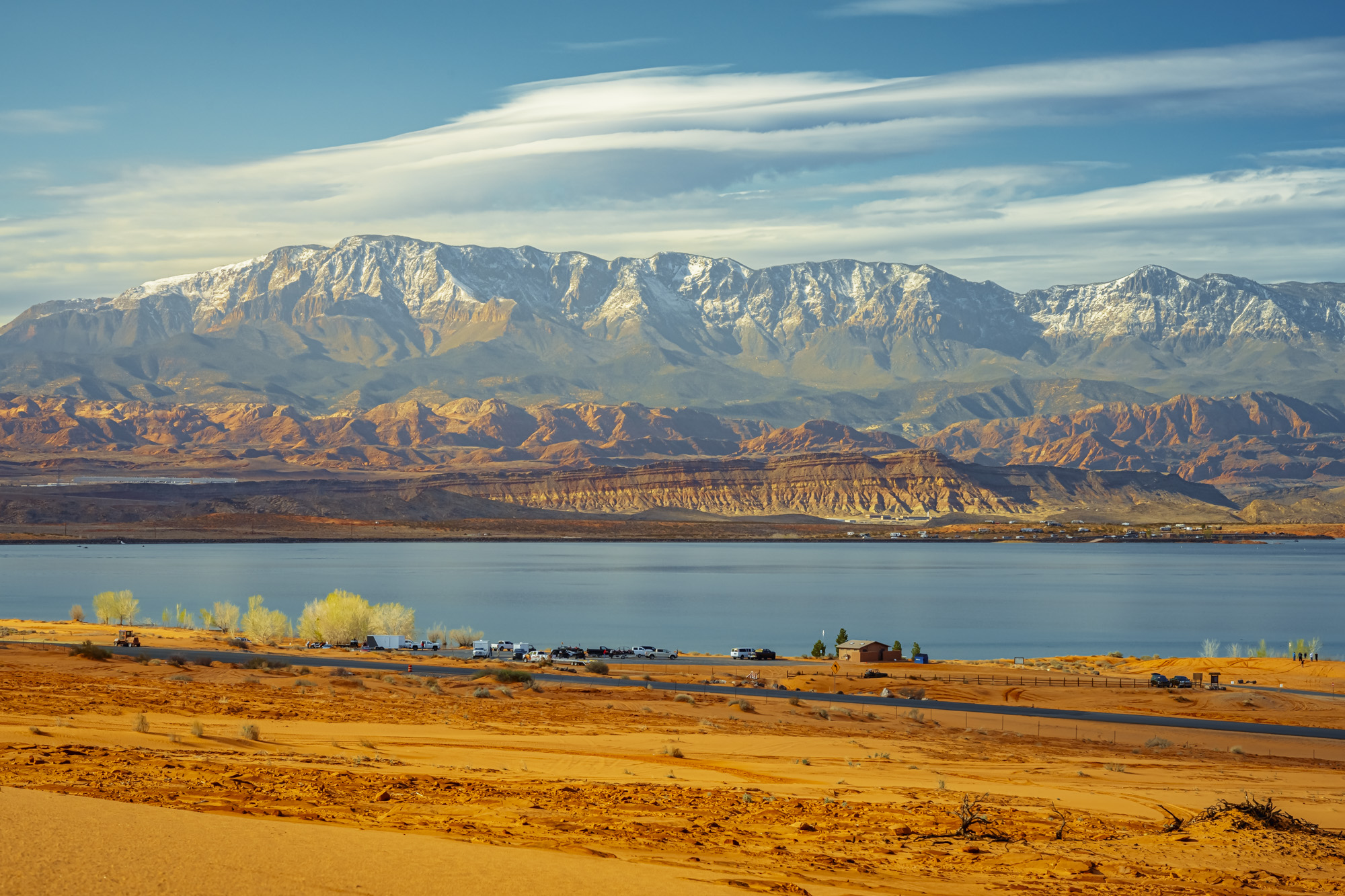
Southern Utah isn’t usually what people imagine when they think of fall color. The mental picture is all red cliffs and desert brush, maybe a few tumbleweeds rolling across a dry road. But tucked between the sandstone canyons and lava flows are mountain passes, alpine meadows, and forested plateaus that completely transform once autumn rolls in. Aspens flare gold, oaks turn orange and deep red, and the air takes on a crispness that’s a welcome break from the long summer heat. The contrast between colorful leaves and red rock makes fall here feel like something out of a film set.
This part of Utah doesn’t just dabble in fall—it delivers it in ways that catch people off guard. You can stand at the edge of a volcanic cliff looking over a yellow-hued valley or wind your way through canyons lined with maples glowing in the afternoon sun. And the best part is, most of these spots are still relatively quiet. You won’t be elbow-to-elbow with tourists, and there’s a good chance you’ll find places that feel entirely your own.
Scenic Drives That Put the Colors Front and Center
Kolob Terrace Road is one of those routes that doesn’t advertise itself, which is probably why it still feels like a secret. The road climbs quickly from the base of Zion National Park into higher elevations where the landscape changes in layers. In early October, groves of aspen trees stand out like gold coins scattered along the hillsides, while pockets of oak and maple add shades of red. The drive itself is enough to make anyone pull over every five minutes just to take it all in.
Highway 14 between Cedar City and Duck Creek is another stretch worth planning a trip around. It cuts through thick forests where the trees line the road on both sides like a tunnel of color. This area usually hits its peak in mid-October, but even before and after the prime window, the drive offers more variety than most. It moves through canyons, ridgelines, and high plateaus where the views stretch for miles.
The road to Cedar Breaks and Brian Head climbs even higher, and with that elevation comes some of the most vibrant displays in the region. The landscape feels rugged and dramatic, which only makes the colorful leaves stand out more. Up here, the air smells like pine, and the views feel like they go on forever. The amphitheater at Cedar Breaks is especially striking when framed by the oranges and yellows of nearby trees. It’s a place that feels remote but is still easy to reach, and in fall, it’s absolutely packed with color.
A more laid-back route can be found by heading toward Pine Valley. It’s an area that gets overlooked compared to some of the bigger names, but that’s exactly why it’s worth visiting. The roads are quiet, the groves of trees are dense, and the scenery is peaceful in a way that makes you want to stay longer than planned. Pine Valley usually sees its peak colors a little later in the season, giving travelers an extra window to catch the change.
Hiking Trails That Drop You Right Into the Color
Some of the best views in Southern Utah aren’t from the road. They’re out on the trails, where the colors feel more immersive and the experience becomes something you remember for years. Aspen Mirror Lake is one of those places. It’s a short, easy loop near Duck Creek Village that wraps around a reflective alpine lake. When the leaves hit their peak, the water mirrors the trees perfectly, especially in the early morning when the light is soft and the surface is still.
For hikers looking for more of a workout, Red Hollow Trail in Cedar Canyon delivers. The trail starts out winding through narrow rock walls, then slowly opens up into a colorful forest filled with oak and maple trees. During the fall, the colors are intense. The path climbs just enough to give you some solid elevation change without pushing into full-day-hike territory. The mix of red rock and changing leaves makes every turn feel like a photo waiting to happen.
In the Kolob Canyons section of Zion, Northgate Peaks Trail offers a quieter alternative to the main canyon hikes. This one leads across open forested plateaus, with panoramic views of distant peaks and valleys. In the fall, the forest lights up with color, and the cooler temperatures make the hike feel a lot more manageable than in the summer. The trail is well-marked, the views are consistent, and you’re not likely to run into heavy crowds.
Snow Canyon State Park might not be the first place you’d think of for fall color, but the desert landscape takes on its own version of the season. Golden desert plants pop against the black lava rock and red sandstone, and the lighting in the canyon becomes softer, more textured. Trails like Hidden Pinyon or Butterfly Trail are especially rewarding this time of year, offering a mix of desert views and changing plants that feel surprisingly seasonal. It’s a different kind of autumn, but one that’s every bit as impressive.
Best Times to Visit and What to Expect
Timing is everything when it comes to chasing fall foliage in Utah. Because of the elevation differences across the region, the color starts at the higher elevations and works its way down over a period of several weeks. Areas like Brian Head and Cedar Breaks usually start turning in mid to late September, while places like Pine Valley and Snow Canyon hit their stride closer to mid or even late October.
Every year is a little different. A long, hot September can delay the shift. An early cold snap can kick it into high gear. If you’re planning a trip, it helps to keep your dates flexible and check in with local reports or even user-submitted photos on social media to get a real-time look at what’s happening. The good news is, because the region is so varied in elevation, you can usually find somewhere that’s hitting peak color no matter when you visit between late September and late October.
Fall in Southern Utah is also a great time for travel in general. The temperatures drop just enough to make full days outside more comfortable, and the summer crowds start to thin out. Weekdays are quieter on the trails and roads, and lodging in some areas becomes easier to book without too much advance notice. You’ll still want to bring layers, though. Even if it’s warm during the day, mornings and evenings can get cold quickly, especially if you’re camping or hiking at elevation.
For those who like a little bonus with their fall views, many of these areas also fall within certified dark sky zones. That means clear, star-filled nights with very little light pollution. After a day of chasing color, stargazing under a crisp autumn sky makes for a perfect wind-down. Pack a thermos, find a quiet overlook, and let the Milky Way show off for a bit.
Southern Utah may not be the first place that comes to mind when you think of classic fall destinations, but it deserves a spot on the list. The contrast between bright leaves and rugged red rock is unforgettable. The quiet trails and open drives feel a world away from the usual crowded leaf-peeping spots. And the whole experience, from the sound of leaves underfoot to the smell of fresh pine, makes for a season that’s equal parts adventure and calm.
There’s something about the way fall settles into this landscape. It doesn’t try to copy what you’d see in the Northeast. It leans into its own version of the season, shaped by canyons, cliffs, and high desert meadows. The result is a kind of beauty that catches you off guard, sticks in your memory, and gives you another reason to come back next year.