If you have ever tried to visit Zion National Park in the middle of July, you know the drill. You wake up before the sun just to fight for a parking spot that might not exist. You stand in a line for the shuttle that wraps around the visitor center like a theme park queue. You sweat through your shirt before you even hit the trailhead, and you spend the entire day shuffling behind strangers on a paved path while dodging selfie sticks. It is magnificent, sure, but it is also an endurance test. It is a version of nature that feels a lot like a shopping mall on Black Friday. But there is another version of this canyon that exists only for a few short months of the year. It is quieter, sharper, and infinitely more dignified. Visiting Zion National Park in winter is the strategic move for the traveler who actually wants to see the park rather than just the back of someone’s head.
The common misconception is that the park shuts down when the temperature drops. People assume the snow closes the roads or that the trails become impassable frozen wastelands. The reality is far more inviting. Zion sits at an elevation that allows for distinct winters without the deep freeze you find in the Rockies. The days are crisp and often sunny, the air is clear enough to see for miles, and the silence is heavy. You can walk for twenty minutes on a major trail and not see another soul. The red rock radiates a different kind of energy when it is dusted with white snow, creating a visual contrast that summer tourists never get to see. It is a landscape that demands respect rather than just consumption.
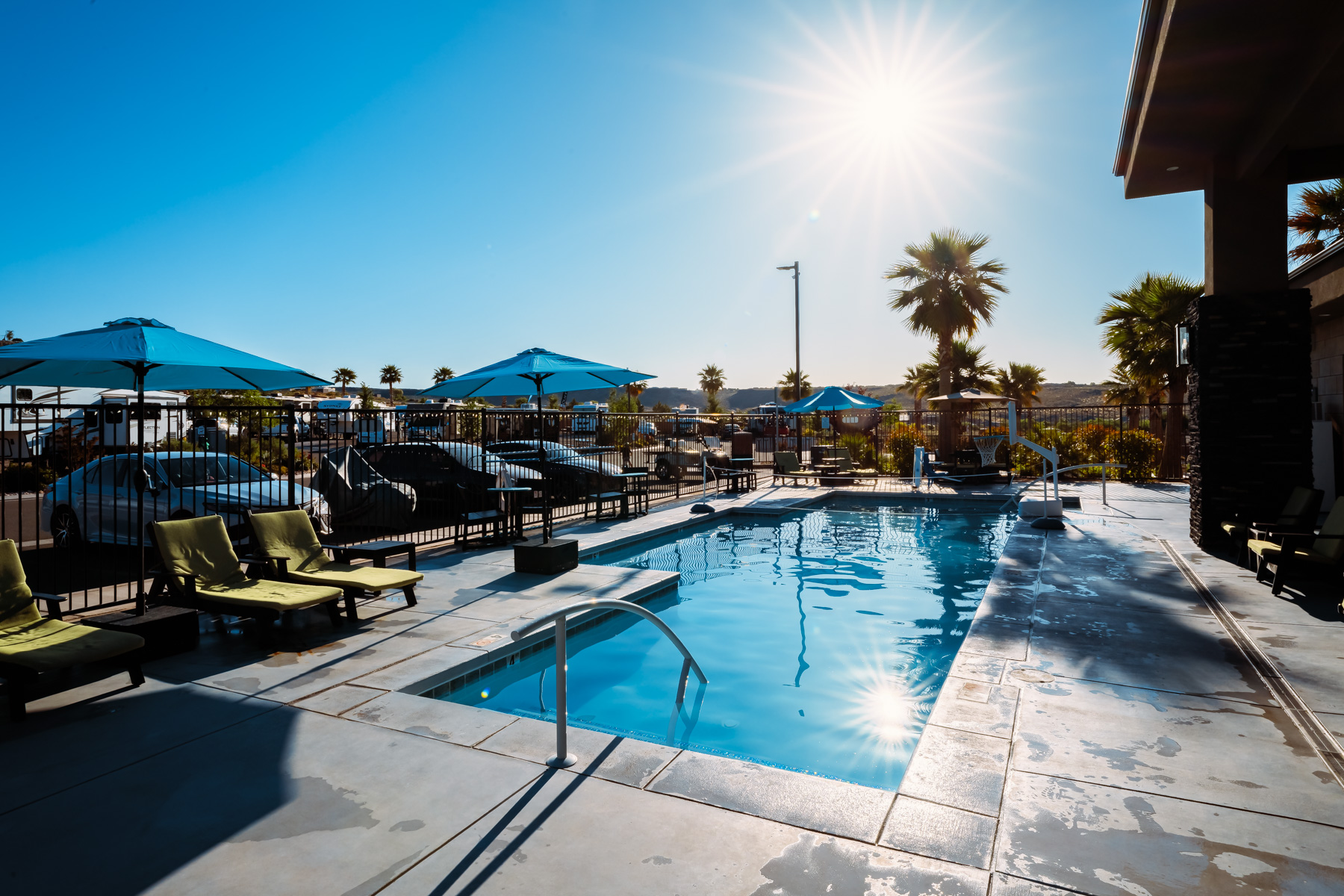
Making the choice to go against the grain requires a bit of courage. You have to be willing to trade shorts for layers and accept that the sun sets earlier. But the payoff is immediate. You are not just a number in a turnstile count. You are a guest in a cathedral of stone that has finally emptied out. This is the time when the locals go. This is the time when the photographers go. And if you are smart about how you travel, this is the time when you go. By basing yourself nearby at a luxury spot like Settlers Point, you get the best of both worlds. You get the rugged, empty wilderness during the day and a heated pool and full hookups at night. It is the only way to do it.
Why Zion National Park In Winter Is The Superior Choice
The single biggest advantage of an off-season trip is the logistics of movement. During the peak season, the Zion Canyon Scenic Drive is closed to private vehicles. You are forced to use the shuttle system, which is efficient but rigid. You operate on their schedule, not yours. However, for large chunks of the winter—usually whenever the holiday crowds aren’t peaking—the park opens the scenic drive to private cars. This changes the entire texture of the experience. You can drive your own truck all the way to the Temple of Sinawava. You can pull over when you want to take a picture. You can crank the heat, listen to your own music, and move through the canyon at your own pace. Driving beneath those towering cliffs without a bus schedule in your pocket is a level of freedom that feels almost illicit after seeing the summer chaos.
Beyond the driving, the trails themselves transform. Angels Landing is still there, and while you still need a permit, the competition for space drops significantly. The chains are cold on your hands, but the view from the top is clearer than it ever is in the hazy heat of August. The lower trails, like the Pa’rus Trail or the Riverside Walk, become meditative experiences. You can hear the Virgin River moving. You can hear the wind in the cottonwoods. These are sounds that are usually drowned out by the dull roar of thousands of conversations. When you hike Zion National Park in winter, you are experiencing the park as it was before Instagram turned it into a bucket list checkbox. You are engaging with the geology and the scale of the place on a personal level.
There is also a practical element to the weather that experienced hikers prefer. Hiking in ninety-degree heat is dangerous and exhausting. You burn through water, you get sluggish, and you spend half your mental energy just managing your body temperature. In the winter, with daytime highs often in the fifties, you can hike for miles without feeling drained. You generate your own heat. The physical act of exploring the canyon becomes easier, not harder. You can cover more ground and see more sights without the oppressive weight of the sun bearing down on you. It turns a physical ordeal into a genuine pleasure.
Planning Your Day Trips From St George Utah Into The Canyon
Positioning yourself correctly is the key to executing this trip. Staying inside the park lodges is expensive and often booked out even in the slow season, and camping in a tent when it is thirty degrees at night is a misery you do not need to inflict on yourself. The strategic play is to set up base camp at Settlers Point and treat the park as one of your day trips from St George Utah. The drive from St. George to the south entrance of Zion is easy, scenic, and fast. You are close enough to be at the gate with your morning coffee before the light hits the peaks, but you are far enough away to enjoy the amenities of a real city in the evening. You are not trapped in a tourist trap gateway town eating overpriced burgers. You are living in comfort and commuting to the wild.
The drive itself is part of the appeal. As you head east on State Route 9, you move through a transition of landscapes that sets the table for the main event. You pass through Hurricane and La Verkin, climbing up the mesas until the jagged profile of the park dominates the horizon. These scenic drives Utah offers are world-class, and in the winter, the roads are clear of the rental RV convoys that clog the arteries in the summer. You can actually enjoy the mechanics of driving. Once you enter the park and if the private vehicle access is active, the drive up the canyon floor is hypnotic. The walls close in, the river winds alongside the road, and every turn reveals a new rock formation that looks like it was carved by a giant.
Using St. George as your hub allows you to pivot if the weather does turn. If a winter storm hits the high country in Zion, you can easily divert to Snow Canyon State Park or explore the lowland trails around St. George where snow is rare. You have options. You are not pinned down by a single reservation inside the park boundaries. This flexibility is crucial for off-season Zion travel. You can play the weather, choose your days, and maximize your time. You might spend one day driving the switchbacks up to the Zion-Mt. Carmel Tunnel to see the Checkerboard Mesa, and the next day golfing in St. George in a light jacket. The proximity makes it all possible.
Photography And Weather For Off-Season Zion Travel
If you own a camera, or even if you just have a decent phone, winter is the only season that matters. The light in the summer is harsh and flat for most of the day. The sun is directly overhead, bleaching out the colors and hiding the texture of the rock. In the winter, the sun stays lower in the southern sky. This creates long, dramatic shadows that reveal the depth of the canyon walls all day long. The red sandstone glows with a saturation that looks fake on a screen but is absolutely real to the naked eye. When you add the element of snow—white powder clinging to the ledges of bright orange cliffs against a deep blue sky—you have a color palette that is almost impossible to take a bad picture of. Zion National Park in winter is a cheat code for landscape photography.
You also have to consider the atmosphere. Winter storms in the desert are dramatic events. Clouds snag on the peaks of the West Temple and the Watchman, creating mood and scale that bluebird days can never match. The mist rising off the Virgin River in the morning adds a layer of mystery to the valley floor. These are the conditions that professional photographers wait years for, and you can stumble into them just by booking a trip in January. Even the wildlife seems more active and visible against the stark background. Mule deer graze near the road without fear, and you might spot wild turkeys or eagles that are usually hiding from the summer mobs.
Let’s talk about the gear, because people overthink this. You do not need to dress like you are climbing Everest. Layers are your friend. A good base layer, a fleece, and a shell to cut the wind will get you through almost anything Zion throws at you in the daytime. The sun is still strong, so when you are moving, you will be warm. The key is footwear. The trails can have patches of ice or packed snow, especially in the shadows of the canyon walls. A simple pair of traction cleats that slip over your hiking boots will make you feel like a superhero while everyone else is sliding around in sneakers. It is a twenty-dollar investment that unlocks the entire park. It is a small price to pay for owning the trail.
Your Strategy For Visiting Zion National Park In Winter
The decision to visit the desert in the winter is the difference between being a tourist and being a traveler. A tourist goes when the brochure tells them to go. A traveler goes when the experience is at its best. The solitude, the visual drama, and the freedom of movement make the off-season the undisputed champion of Utah road trips. You get to see the park as it was intended to be seen—wild, quiet, and imposing. You strip away the friction of crowds and shuttles and replace it with the freedom of the open road and the trail.
This is not about suffering through the cold; it is about leveraging the season to upgrade your experience. By staying at Settlers Point, you ensure that your winter adventure is bookended by luxury. You are not shivering in a tent or overpaying for a mediocre motel room. You are coming home to a heated pool, a spacious site, and a community that understands why you are here. You are doing it right.
The calendar is open. The canyon is quiet. The red rocks are waiting for the snow. Stop waiting for the “perfect” time in the summer that never actually comes. The perfect time is right now, when everyone else is staying home. Pack your layers, bring your camera, and come see what Zion actually looks like.