Most travelers looking at rv parks in southern utah see a cluster of pins on a map and assume they are all the same. St. George, Washington, Hurricane, La Verkin, Leeds. The names blur together when you are scanning listings from a thousand miles away. But each town sits at a different distance from different things, and the one you pick shapes the entire trip.
The problem is not a lack of options. It is the opposite. Dozens of parks line the I-15 corridor between St. George and Zion National Park. Some are five minutes from Sand Hollow. Others are forty-five minutes from the Zion entrance but ten minutes from downtown restaurants and shopping.
Some sit on a highway frontage road. Others back up to red rock views with nothing behind them but desert. The difference between a great week and a frustrating one usually comes down to which town you chose and why.
This guide breaks down the corridor town by town so you can match your basecamp to your priorities. Whether your trip is built around Zion, around the St. George area, or around doing a bit of everything, the right town matters. It is the one that puts you closest to the days you actually want to have.
Why the Town Matters When Choosing RV Parks in Southern Utah
RV travelers tend to book on price and photos. That makes sense when every park is ten minutes from the same stuff. In southern utah, the gap between towns is real. Washington and St. George sit at the southern end of the corridor, closest to shopping, dining, medical care, golf, and city-level services. Hurricane and La Verkin sit at the northern end, closest to the Zion entrance on SR-9. Leeds is a few miles further north, right off I-15 Exit 22, tucked against Red Cliffs National Conservation Area.
Each town has a different feel. St. George is the commercial hub with a population over 100,000. Washington is quieter, smaller, and sits just east of St. George along I-15. Hurricane has a more rural character with its own grocery stores and restaurants. La Verkin is smaller still and serves mostly as a pass-through to Zion. The town you pick determines your commute to the trailhead, your evening options, and how much road noise you hear at night.
For a week-long trip, the commute math adds up fast. A park in Washington puts you about fifteen minutes from Sand Hollow and twenty minutes from Snow Canyon. The Zion Canyon Visitor Center is about forty-five minutes away. A park in Hurricane cuts the Zion drive to about thirty minutes but adds fifteen minutes to anything in St. George. That daily tradeoff is worth thinking through before you book.

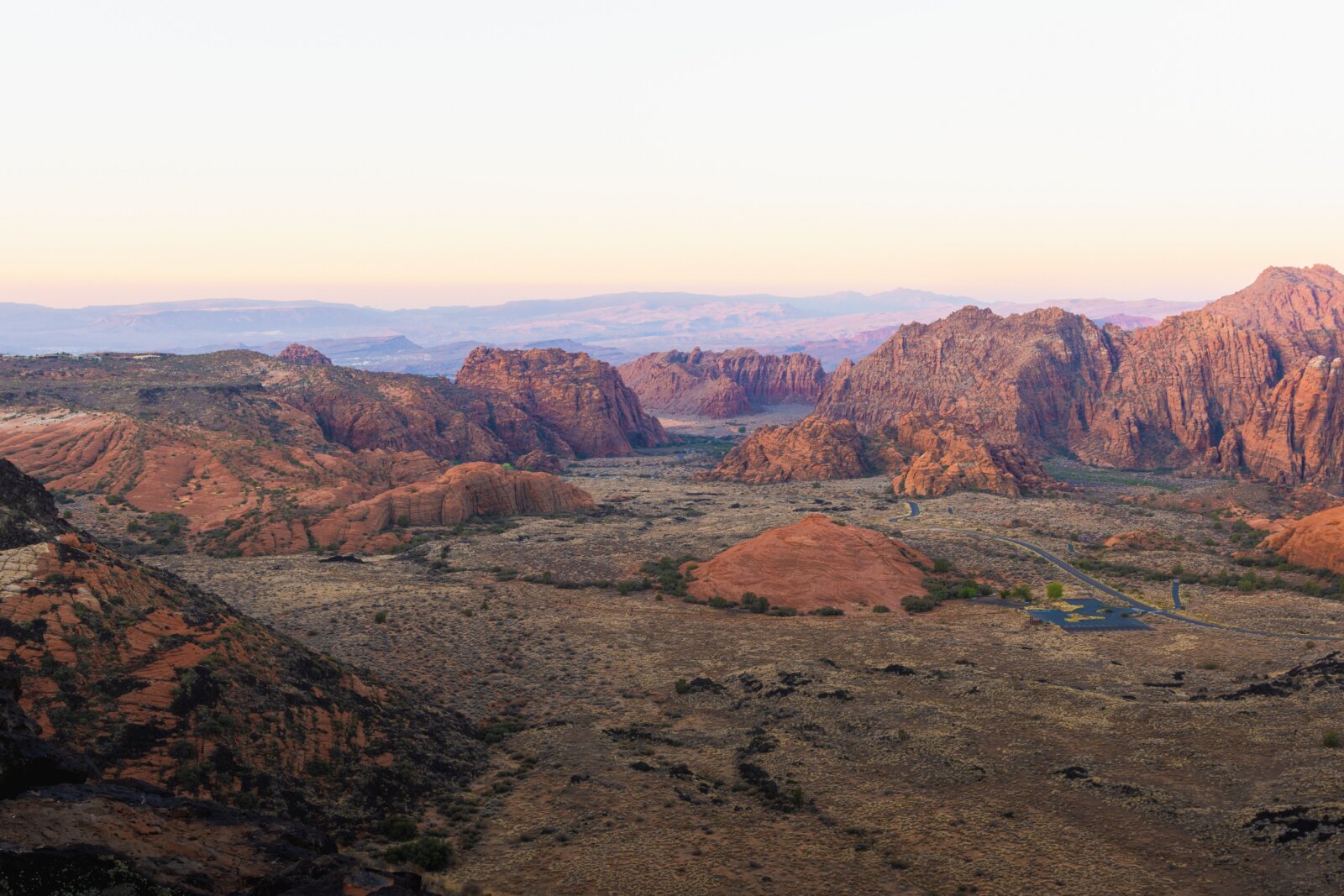
Striking layered red sandstone formations tower above open scrubland, offering a breathtaking natural backdrop for outdoor adventure and exploration. Photo by: NPS Photo / NPS.
St. George and Washington for RV Parks in Southern Utah
St. George is the anchor. It has the most restaurants, grocery stores, and medical facilities in the region. It also has the most things to do in st george utah that do not involve a trail. If your trip includes rest days, shopping days, or evenings out, staying in or near St. George makes sense. The city also has direct access to Snow Canyon State Park, multiple golf courses, and the Dixie Convention Center for events.
Washington sits right next door, just a few miles east along I-15. It is close enough to St. George that you can reach downtown in under ten minutes, but the town itself is quieter and less commercial. Several of the newer rv parks southern utah travelers book have been built in Washington. The land is more available and the development pressure is lower than in the city center. You get the access without the traffic.
The tradeoff is distance to Zion. From Washington or St. George, the drive to the Zion Canyon Visitor Center runs about forty to fifty minutes. That depends on traffic and the route you take. That is fine for a day trip, especially if you leave early.
But if your plan is to hit the Zion shuttle every morning for a week, you are going to feel the drive by day three. For travelers whose trip is split evenly between Zion and non-Zion days, the St. George and Washington corridor is usually the better pick. You can check what the area offers beyond the parks before deciding how to split your days.
Hurricane and La Verkin for RV Parks in Southern Utah
Hurricane is the Zion-first basecamp. From most rv parks near zion national park in the Hurricane area, you are about twenty-five to thirty-five minutes from the Visitor Center via SR-9. That is a meaningful difference when you are waking up at six to catch the first shuttle. The town has its own Walmart, Smith’s grocery, several gas stations, and a growing restaurant scene along State Street. It is not as built out as St. George, but it covers the basics.
La Verkin is a few miles further up SR-9, even closer to Zion. It is a small town with limited services, but a handful of RV parks sit in the area and benefit from the shorter drive. The tradeoff is that La Verkin has almost no dining or shopping of its own. You are relying on Hurricane for errands and St. George for anything more involved.
Hurricane also sits close to Sand Hollow State Park. The reservoir is about ten to fifteen minutes south of town. That makes Hurricane a strong option for travelers who want both Zion access and water recreation in the same week. The Quail Creek Reservoir is even closer. For southern utah travelers who want canyon hiking and lake days, Hurricane serves both without a long drive in either direction.
The downside is the distance to St. George. A trip to the St. George Town Square for dinner or a show runs about twenty-five to thirty minutes each way. Golf courses, medical care, and most of the region’s shopping are in St. George. If your trip involves frequent city errands or non-outdoor activities, Hurricane starts to feel like a compromise.
Picking the Right Basecamp Along the RV Parks in Southern Utah Corridor
The decision comes down to three questions. Where are you spending most of your days? How much do you care about evening options near camp? And how long are you staying?
For short trips of three to four nights focused on Zion, Hurricane wins. The shorter drive means more time on the trail and less time behind the wheel. For longer stays of a week or more, Washington or St. George gives you more to work with. Couples and families who want variety will find rest-day and bad-weather options that Hurricane does not have.
For travelers who want a balance of everything, the Washington area is often the sweet spot. It puts you close enough to St. George for dining and shopping. Sand Hollow is nearby for a morning on the water. And Zion is within a reasonable drive for full day trips.
The I-15 access is direct. The town is calm. And the newer RV parks built here tend to offer updated infrastructure and better site spacing than older parks closer to the highway.
Leeds is worth a mention for travelers focused on Red Cliffs National Conservation Area or the Silver Reef ghost town area. It is a tiny community with very limited services, but it sits right at I-15 Exit 22 with quick access to the Red Cliffs trailheads. It is not a practical basecamp for a full week unless you are comfortable driving into St. George or Hurricane for everything.
No matter which town you pick, the corridor is compact enough that nothing is truly far. The worst-case drive between the southern end of St. George and the Zion entrance is about an hour. The question is whether you want to spend that hour driving every day. Or whether you would rather base closer to the things you plan to do most.
If you are still weighing towns and want to talk through how your trip breaks down, the Settlers Point team is here to help. Reach out before you book and we will walk you through which basecamp fits your dates and your rig. You can also leave a comment below if you have questions about any specific town in the corridor.