Comparing monthly RV parks in Utah? See how St. George stacks up against sites closer to Zion for longer stays, plus what to ask before you book.
A weekend RV trip and a thirty night RV stay are not the same kind of trip. Anyone who has done both will tell you that. On a short stay, you can put up with almost anything. A site that runs a little tight. Wifi that drops every evening around dinner. None of that holds up once you are looking at monthly RV parks in Utah for a real stretch of time.
Southern Utah has quietly become one of the busiest corridors in the state for exactly this kind of stay. Snowbirds escape colder states. Remote workers log in from wherever they park. Families stretch a national park trip into something slower. All of them end up asking the same question. Which park actually works once the stay stops feeling like a vacation and starts feeling like where you live for a while.
This guide breaks down why location matters more on a longer stay. It compares the St. George corridor to parks sitting closer to Zion. It also walks through what changes about daily life once you settle in, and the questions worth asking before you sign anything.
Why Location Matters More on a Monthly Stay
On a two night stay, location is a convenience. On a monthly stay, it becomes the frame around your entire routine. You are not just picking a place to sleep. You are picking your grocery run, your gym, and the vet you would call if your dog needed one. You are also picking the drive time that separates you from the parts of Southern Utah you actually came here for.
This is where monthly RV parks in Utah start to separate from each other fast. A park that makes a fun overnight stop can turn into a frustrating home base fast. Drive that same twenty minute stretch for the tenth time in a week and you will feel it. Distance that felt minor for a weekend adds up differently across thirty days.
Rig owners who have done a full month somewhere consistently mention the same pattern. The parks that feel great for three nights and the parks that feel great for thirty nights are often not the same parks at all. Proximity to daily needs starts to outweigh proximity to any single attraction.
That is part of why long term RV parks in Utah tend to cluster around larger service hubs rather than scattering evenly across the region. St. George checks that box in a way that smaller towns along the corridor simply cannot.
St. George Versus the Parks Closer to Zion
Parks sitting right at Zion’s front door have an obvious pitch. You wake up close to the trailhead. For a three day trip built entirely around one park, that is hard to beat.
Stretch that same trip to thirty days and the math shifts. Grocery options near the park entrance thin out fast. Service and utility costs often run higher. Many of those parks were built for turnover, not for guests settling in. A site designed for a two night stay does not always hold up the same way after a month of daily use.
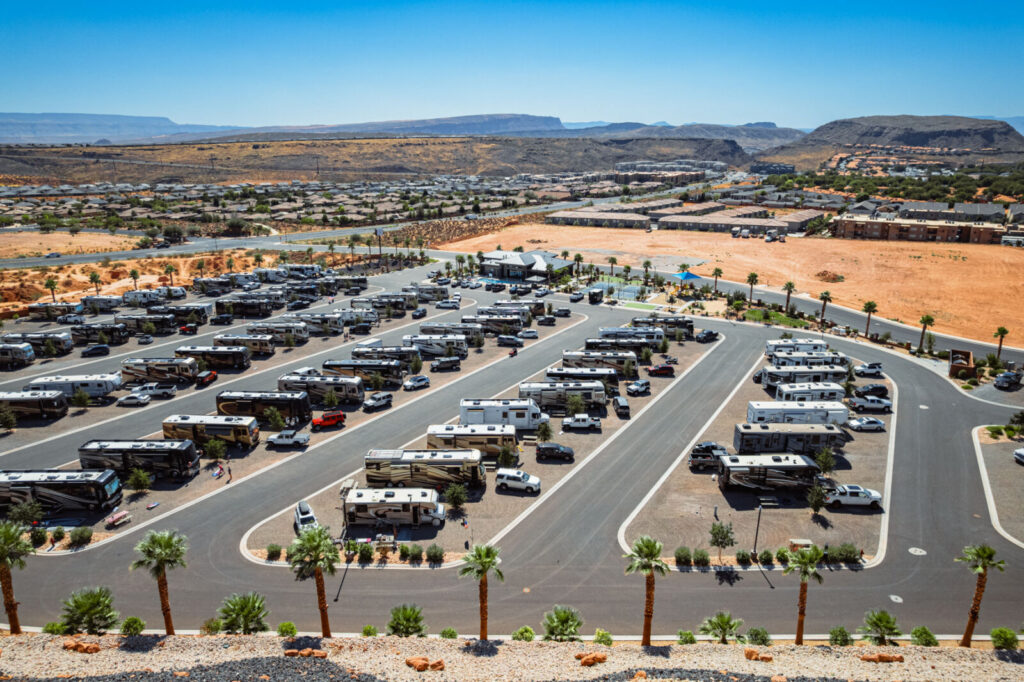
St. George offers something different. You get real grocery stores, a hospital, pharmacies, and a wider range of things to do on a rest day, all within a short drive. Zion is still close enough for a regular visit.
RV parks near Zion National Park closer to the entrance win on morning convenience. St. George tends to win on everything else once a stay stretches past a week or two.
Snowbird RV parks in Utah lean toward this same pattern for a reason. Winter travelers are not chasing a single trailhead. They are looking for mild weather, real infrastructure, and a park built around people staying put (a distinction most listings never quite say out loud). That combination shows up more consistently in the St. George corridor than in the smaller towns pressed right against the park boundary.
For more on how corridor towns compare for shorter trips, see our guide to RV parks near Zion National Park and choosing a base camp.
What Actually Changes Once You Settle In
The daily rhythm of a park looks different once turnover slows down. Neighbors start recognizing each other. Staff start remembering your name instead of your site number. That shift matters more than it sounds like on paper.
Infrastructure gets tested in ways a two night stay never reveals. Thirty amp service that felt fine for a weekend can strain under a full month of daily use. Add a second AC unit or a full size fridge running nonstop, and that math changes fast. Water pressure that seemed adequate at first can start to feel thin by week three.
Practical logistics start mattering too. Mail and package delivery, laundry access that does not require a line, and a dump station that is not a production every single time. These are the unglamorous details that rarely make it into a listing photo but shape whether a month actually feels comfortable.
Community becomes part of the experience in a way it simply is not on a short trip. Long term guests tend to know which spots get afternoon shade and which neighbors host a Friday gathering. They know which staff member to ask when something needs fixing. That kind of familiarity only builds with time. It is one of the more underrated reasons a planned two week stay turns into a full season.
Choosing the Right Monthly RV Park Near Zion
Not every listing calling itself one of the monthly RV parks in Utah actually delivers on that promise once you arrive. A few direct questions do more work than any glossy amenities list. Ask what the site’s actual amperage supports under full daily load, not just what the listing claims. Ask how utility billing works past the first thirty days, since some parks shift pricing once a stay crosses that line. Ask what a typical week looks like for other extended stay guests, not just what a weekend visitor experiences.
Ask about grocery and pharmacy distance in real drive time, not straight line distance on a map. Ask whether the dump station and laundry facilities are built for daily community use or occasional weekend traffic. And ask, honestly, whether the park wants long term guests or simply tolerates them.
If you are weighing a stay longer than thirty days, start that conversation early. Do not assume any site with a monthly rate will work the same way. Our extended stay application is a straightforward way to start that conversation. It gets you real answers about site availability, utilities, and what a longer stay at Settlers Point actually looks like day to day.
Southern Utah rewards travelers who ask these questions before they commit. The right monthly RV park near Zion is not the one with the best drone shot. It is the one that still feels comfortable on day twenty five.