The St. George area looks simple on a map. A handful of towns in southwest Utah, a few state parks, and Zion less than an hour east. Most first-time visitors assume they can figure it out on arrival. They book the first available park, pack for warm weather, and drive in expecting a straightforward RV camping trip. What they find in St. George, Utah is a region with more heat, more variety, and more logistical nuance than they planned for.
RV camping in St. George, Utah works well when you understand what you are getting into. The climate is different from what most travelers expect. The park options range from basic gravel lots to full-service resorts, and the gap between those is wider than the price difference suggests. First-timers who skip the planning step spend the first two days adjusting instead of enjoying.
This post covers the misconceptions, the surprises, and the practical planning details that make a first RV trip to this area work from day one.
The Misconceptions That Trip Up First-Time Visitors
The biggest misconception is that St. George is just a stop on the way to Zion. It is not. The area has enough outdoor recreation to fill a week without the national park. Snow Canyon, Sand Hollow, Red Cliffs, and a growing downtown with restaurants and culture all stand on their own. Travelers who treat St. George as a pit stop miss the majority of what the region offers.
The second misconception is that all RV parks in the area are roughly the same. They are not. Campgrounds in St. George, Utah range from older municipal parks with tight sites to newer resorts with pools, pickleball courts, and full 50-amp service. The gap in daily experience between those two ends is significant. A quick search and the cheapest option is not the same as a researched decision.
The third misconception is about the weather. People hear “Utah” and think cold. St. George sits at about 2,800 feet in the Mojave Desert transition zone. Summer highs regularly exceed 110 degrees. Spring and fall are mild and comfortable, but the temperature swings between morning and afternoon can reach 40 degrees in a single day. If you pack for one season, you will be wrong by noon.
How Your Location Choice Shapes the Entire Experience
The St. George area is not one place. It is a collection of small towns spread across about 20 miles, and where you park your rig changes the trip. St. George proper gives you the most dining, shopping, and errand options. Washington is quieter and puts you closer to Sand Hollow. Hurricane sits between St. George and Zion, which makes it a solid middle ground for travelers splitting time between the two.
Each location has trade-offs. Campgrounds near St. George offer the easiest access to grocery stores, fuel, and medical facilities. Parks in Hurricane cut 15 to 20 minutes off your Zion drive but sit further from town amenities. Washington splits the difference and tends to have newer parks with better infrastructure.
For first-time visitors, the safest play is a park in the St. George or Washington area. You stay close to everything you need for daily life, and the drives to Zion, Snow Canyon, and Sand Hollow are all under 45 minutes. You avoid the frustration of being stuck in a remote spot when you need a hardware store or a propane refill at 7 PM.
Think about how you actually spend your days. If half your time involves errands, meals out, and non-hiking activities, proximity to town matters more than proximity to a trailhead. If you hike every day and cook every meal in the rig, Hurricane might be the better fit.
The Climate and Terrain Surprises That Catch People Off Guard
The heat is the first surprise. From June through September, afternoon temperatures in St. George routinely hit 100 to 115 degrees. Asphalt and gravel RV pads amplify that heat. Your air conditioning will run nonstop, and your electric bill at the park will reflect it. If your rig only has 30-amp service, running two AC units at the same time is not possible. Confirm your hookup amperage before you book a summer stay.
The second surprise is the sun intensity. St. George averages over 300 sunny days per year. Your awning, furniture, and any gear left outside will degrade faster here than anywhere you have camped before. Shade structures at your site are not a luxury. They are a necessity.
Water is the third surprise. The region is in a long-term drought, and some parks meter water usage or limit exterior washing. Bring extra containers and plan for conservation.
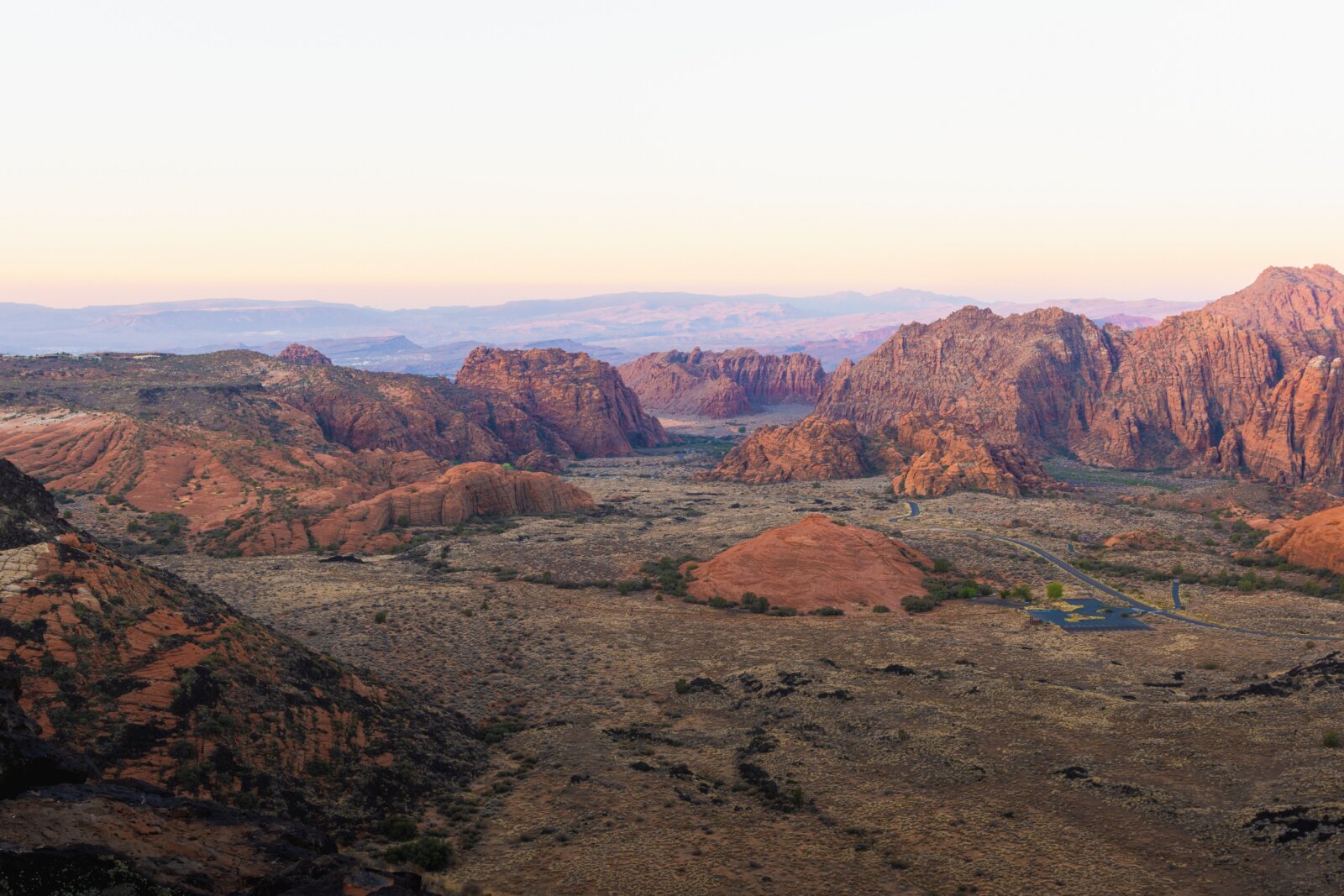
The terrain varies more than most visitors expect. Within 30 minutes of your park you can stand on red sandstone, black lava fields, sandy dunes, or green farmland. Some access roads are rough gravel, so check conditions before heading to remote trailheads with a low-clearance vehicle.
A Straightforward Planning Approach for First Timers
Start with the calendar. The best months for RV camping in St. George, Utah are March through May and September through November. Temperatures are mild, crowds are manageable, and you can spend full days outside without heat risk. Summer works if you are heat-tolerant and plan activities around the cooler morning hours. Winter is mild compared to the rest of Utah but can dip into the 30s and 40s at night.
Next, pick your base. Research RV parks in the St. George and Washington corridor first. Look for full hookups with 50-amp service, site dimensions that fit your rig, and reviews that mention the specific amenities you care about. A park that costs $10 more per night but has a pool, reliable Wi-Fi, and wide sites feels like a different trip. Do not book based on the nightly rate alone.
Then plan your days loosely. You do not need an hour-by-hour itinerary, but know which parks you want to visit and how far each one sits from your base. Snow Canyon is 20 minutes from St. George, Sand Hollow about 15 minutes east, and Zion 45 minutes to an hour depending on the entrance. Spreading those visits across the week prevents the fatigue that comes from trying to do everything in two days.
Finally, stock up before you arrive. St. George has a Costco and several full-size grocery stores. But specialty RV supplies and propane refills are easier to handle before you hit the road. Arriving with a full pantry and tested rig means your first day is relaxing instead of a supply run.
Making Your First Visit to the St. George Area Count
The St. George area rewards visitors who plan and punishes the ones who wing it. The desert heat, the spread of the region, and the quality gap between parks all work against the unprepared traveler. But once you understand how the area operates, it becomes one of the best RV destinations in the western United States.
Pick your season carefully. Choose a park that fits your rig and your daily routine. Build a loose plan around the parks that interest you. Leave room for the days when you just want to sit under the awning and watch the red rock change color in the afternoon light. That flexibility is why you brought the RV in the first place.
RV camping in St. George, Utah is worth the trip. It is just not the trip most first-timers expect. The ones who arrive prepared enjoy it more, spend less time adjusting, and almost always come back.