Zion National Park draws nearly 5 million visitors a year, and most of them make the same avoidable mistakes. They show up at 10 AM, circle the parking lot for 45 minutes, miss the permit lottery, and spend half the day on a shuttle instead of a trail. This guide exists so you don’t join that crowd. Whether you’re planning your first trip or your fifth, what follows is the most current, comprehensive breakdown of everything you need to know to visit Zion in 2026, from shuttle schedules and permit lotteries to trail stats, scenic drives, and the major policy changes that caught many travelers off guard this year.
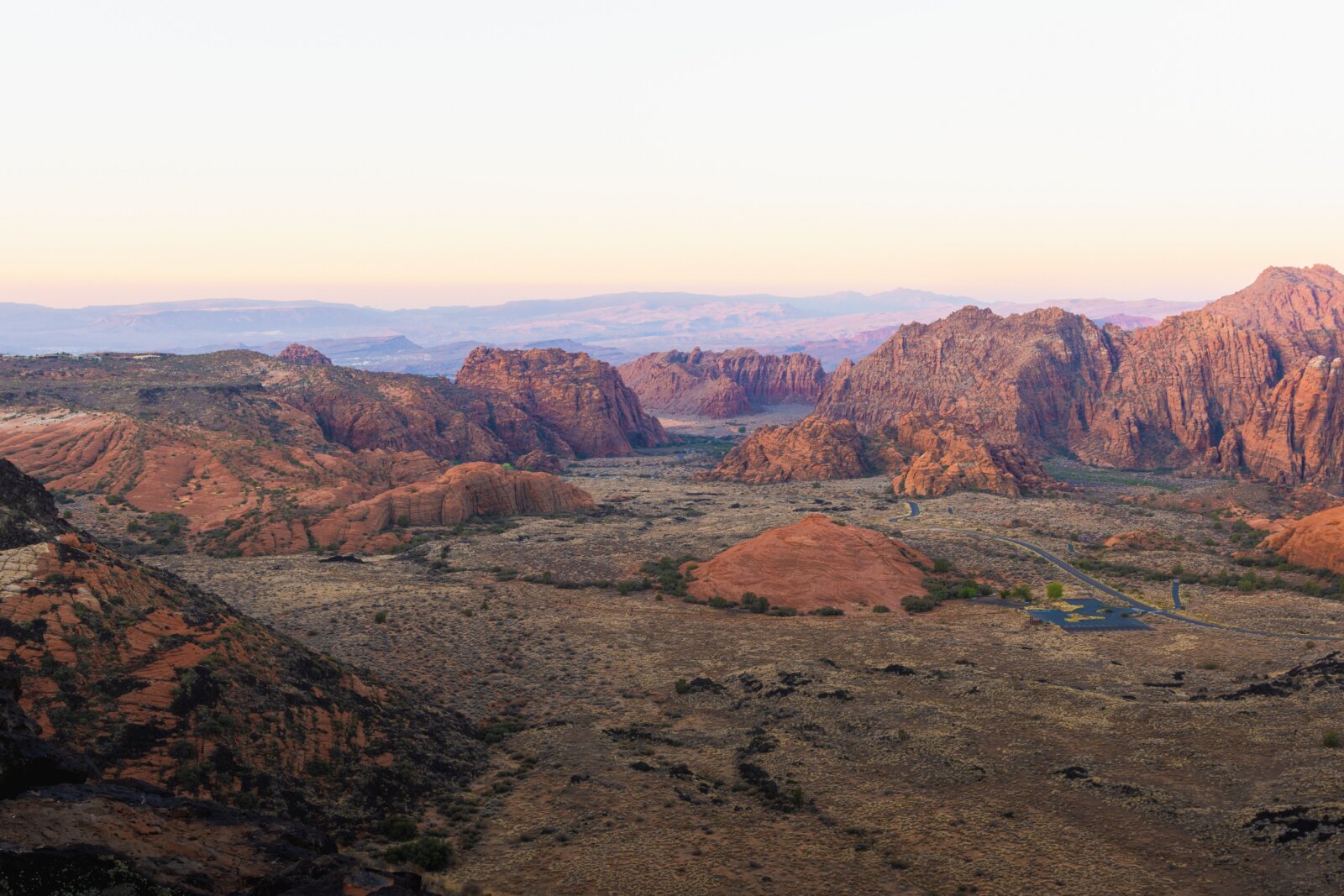
Zion sits in southwestern Utah’s canyon country, where 2,000-foot Navajo sandstone walls rise above the Virgin River in colors that shift from cream to crimson depending on the hour. The park spans 229 square miles across three distinct sections: Zion Canyon, Kolob Canyons, and the Kolob Terrace, each offering a different experience. And if you’re basing yourself at Settlers Point Luxury RV Resort, you’re just 32 miles and 45 minutes from the South Entrance, with a heated pool, full hookups, and a Pet Concierge waiting when you get back.
Here’s everything you need to plan the trip right.
Getting In: Entrance Fees, Passes, and the New 2026 Surcharge
Zion National Park is open 24 hours a day, 365 days a year. The canyons never close. What changes by season is which roads you can drive, which shuttles are running, and how many thousands of people are standing between you and the trailhead.
Standard Entrance Fees (Valid for 7 Consecutive Days)
Entry Type | 2026 Fee |
Private vehicle (up to 15 passengers) | $35 |
Motorcycle | $30 |
Per person (walk-in, bicycle) | $20 |
Children 15 and under | Free |
The America the Beautiful Annual Pass costs $80 and covers entrance to every national park and federal recreation area in the country for a full year. It pays for itself after just three park visits. Seniors (age 62+) can grab a lifetime pass for $80 or an annual for $20. Active-duty military and veterans get free passes.
The Big Change for 2026
Starting January 1, 2026, non-U.S. residents aged 16 and older must pay an additional $100 per person on top of standard entrance fees at Zion and 10 other high-demand parks. This surcharge is waived with the new $250 Non-Resident Annual Pass. Fee-free days, including Presidents’ Day, Memorial Day, and the NPS Birthday on August 25, now apply exclusively to U.S. citizens and residents.
The 2026 Shuttle System: Everything You Need to Know
During peak season, private vehicles are banned from Zion Canyon Scenic Drive. The only way to reach trailheads like Angels Landing, The Narrows, and Emerald Pools is the free park shuttle. Understanding the shuttle is the single most important logistics decision for your trip.
The 2026 shuttle runs from March 7 through November 28, with a brief holiday window from December 26 through January 2. When the shuttle isn’t running, roughly December through early March, you can drive your own vehicle into the canyon. That’s one of the best-kept secrets of a winter visit to Zion.
Zion Canyon Shuttle Schedule
Period | First Bus Departs Visitor Center | Last Bus from Temple of Sinawava |
March 7 – May 16 | 7:00 AM | 7:15 PM |
May 17 – September 12 | 7:00 AM | 8:15 PM |
September 13 – October 24 | 7:00 AM | 7:15 PM |
October 25 – November 28 | 7:00 AM | 6:15 PM |
December 26 – January 2 | 8:00 AM | 5:45 PM |
The shuttle is completely free. No ticket, no reservation, no app required. Buses run every 5 to 10 minutes during peak hours along 9 stops covering the 7.7-mile Zion Canyon route. A full round trip without getting off takes about 90 minutes, but the real play is hopping off at specific stops for hikes and viewpoints.
The Springdale Town Shuttle
The Springdale town shuttle is a separate free system running 9 stops through the gateway town, connecting hotels and restaurants to the park’s pedestrian entrance. It starts an hour later than the park shuttle (8:00 AM) and runs on the same seasonal schedule. If you’re staying in Springdale, this is your lifeline. If you’re staying at Settlers Point and driving in, park in Springdale and catch the town shuttle if the visitor center lot is full, which it will be by 8:30 AM on any summer morning.
New for 2026: Park & Ride in Virgin
A Park & Ride facility opened March 1 at Zion White Bison Resort in Virgin, offering 32 free parking spaces (including 8 oversized/RV spots). A SunTran bus connects to Springdale for $5 one-way. This is a game-changer for RV travelers who don’t want to navigate Springdale’s narrow streets.
Angels Landing Permits: The Lottery System Explained
You cannot hike Angels Landing without a permit. Not sometimes. Not during certain seasons. Every single day, 24/7, year-round, since April 2022. The permit covers the section from Scout Lookout to the summit, the famous chains section where the trail narrows to less than three feet with thousand-foot drops on both sides. Hiking without one carries fines up to $5,000 and six months in jail.
The system runs through two lotteries on Recreation.gov:
Seasonal Lottery (Best Odds for Planning Ahead)
Applications open quarterly, about a month before each season. You pick up to 7 preferred dates and one of three time slots: before 9 AM, 9 AM to noon, or after noon. Each application covers a group of up to 6 people.
Season | Hike Dates | Application Window |
Spring | March 1 – May 31 | February 13–25 |
Summer | June 1 – August 31 | April 1–20 |
Fall | September 1 – November 30 | July 1–20 |
Winter | December 1 – February 28 | October 1–20 |
Day-Before Lottery (For Spontaneous Trips)
Apply between 12:01 AM and 3:00 PM Mountain Time the day before you want to hike. Results arrive by 4:00 PM. This is your second-chance option if the seasonal lottery didn’t work out, and success rates are reasonable on weekdays.
Cost and Odds
The fee is $6 non-refundable per application, plus $3 per person if you win. For a group of four, that’s $18 total. Roughly 47% of lottery applicants were successful in 2024. Weekdays and shoulder-season dates have significantly better odds than July Saturday mornings.
Note: Scheduled trail maintenance closes Angels Landing April 20 through 23, 2026. No permits issued for those dates.
The 15 Best Hikes in Zion, Ranked by Experience
Zion’s trail system ranges from flat, paved riverside strolls to technical canyoneering routes through flooded slot canyons. Here are the essential hikes with verified 2026 stats.
Angels Landing
The most famous hike in Zion and arguably the most thrilling day hike in America. The trail climbs through Refrigerator Canyon, ascends Walter’s Wiggles (21 tight switchbacks carved into the rock), reaches Scout Lookout with its sweeping views, and then, if you have a permit, continues along a knife-edge ridge with chains bolted into the rock as your only handhold. The summit delivers 360-degree panoramic views of the entire Zion Canyon.
Stats: 5.4 miles round-trip | 1,488 ft elevation gain | Strenuous | ~4 hours | Shuttle Stop #6 (The Grotto) | Permit required beyond Scout Lookout
The Narrows (Bottom-Up Day Hike)
This isn’t a trail. It’s the Virgin River itself. You wade, scramble, and sometimes swim through a 2,000-foot-deep slot canyon that narrows to just 20 feet wide. No other hike in the national park system offers anything quite like it. The bottom-up day hike requires no permit (you just can’t pass Big Springs, about 5 miles upstream). Most hikers turn around at Wall Street, roughly 2 miles into the river, where the canyon walls tower overhead and barely a ribbon of sky remains visible.
Stats: Up to 10 miles round-trip (to Big Springs) | Minimal elevation gain | Strenuous (river wading) | 2–8 hours | Shuttle Stop #9 (Temple of Sinawava) | No permit for bottom-up
The Narrows closes when the Virgin River flow exceeds 150 CFS or during flash flood warnings. Spring snowmelt (March through May) frequently shuts it down. Monsoon season (July through September) brings flash flood risk. Canyoneering boots with sticky rubber soles, neoprene socks, and a sturdy walking stick are strongly recommended, all rentable from outfitters in Springdale. Do not drink or submerge your head in the river: toxic cyanobacteria has been detected in the Virgin River system. For a deep dive on gear, timing, and strategy, check out our complete Narrows hiking guide.
Observation Point via East Mesa Trail
With the original Observation Point trail from Weeping Rock closed indefinitely since a massive 2019 rockfall, the East Mesa Trail is now the only way to reach Zion’s highest overlook. At 6,508 feet, you look straight down onto Angels Landing, across to the Great White Throne, and deep into the Narrows. The hike itself is a mellow walk through pinyon-juniper forest that opens suddenly to one of the most jaw-dropping viewpoints in the park.
Stats: ~7 miles round-trip | ~300 ft net elevation change | Moderate | 2.5–4 hours | Accessed from East Mesa Trailhead (dirt road, east side of park)
Access Note
You’ll need to leave the main park, drive east through the tunnel to Highway 9, and take a dirt road past Zion Ponderosa Ranch Resort. High-clearance vehicle recommended. Parking is limited (15 to 20 spots). Zion Ponderosa offers a shuttle for $7 per person.
Canyon Overlook Trail
The best effort-to-reward ratio in Zion. This half-mile trail starts just east of the Zion-Mt. Carmel Tunnel and climbs through carved-sandstone steps, shaded alcoves, and bare slickrock to a panoramic overlook of lower Zion Canyon, the West Temple, and the Towers of the Virgin. It’s magnificent at sunrise.
Stats: 1.0 mile round-trip | 154 ft elevation gain | Easy to Moderate | 30–60 minutes | Located on Highway 9 near the tunnel (no shuttle access; private vehicle required)
Parking is extremely limited, just 5 to 10 spots. Arrive before 8 AM or after 4 PM.
Emerald Pools (Lower, Middle, Upper)
A trio of interconnected trails leading to tiered pools fed by waterfalls that cascade over sandstone overhangs. The Lower Emerald Pools trail is 96% paved and family-friendly, passing directly behind a curtain of water dripping off the cliff face. The Middle and Upper pools add elevation and solitude. Combine all three as a loop for about 3 miles and 620 feet of climbing.
Stats: Lower: 1.2 mi RT, 131 ft gain, Easy | Middle: 1.8 mi RT, 333 ft gain, Moderate | Upper: additional 0.6 mi RT | Shuttle Stop #5 (Zion Lodge) | Great pick for families with kids
Riverside Walk (Gateway to the Narrows)
The flattest, most accessible trail in the canyon. A fully paved, mile-long walk along the Virgin River to the point where the canyon walls pinch together and the trail ends at the water’s edge. This is where The Narrows begins. Even if you have no intention of getting wet, Riverside Walk is worth the shuttle ride to Stop #9 for the towering walls and hanging gardens alone.
Stats: 2.2 miles round-trip | 154 ft elevation gain | Easy | 1–2 hours | Shuttle Stop #9 (Temple of Sinawava) | 100% paved | Partially wheelchair accessible (some grades exceed 8.3%)
Pa’rus Trail
The only trail in Zion where bikes, dogs, and strollers are all welcome. This wide, flat, paved riverside path connects the Visitor Center to Canyon Junction and is the park’s most relaxed walk, ideal for early mornings or late evenings when mule deer graze along the riverbank and the Watchman glows in golden light.
Stats: 3.5 miles round-trip | 152 ft elevation gain | Easy | 1–2 hours | Starts near Visitor Center | Paved (94%) | Wheelchair accessible | Bikes and leashed pets allowed
Watchman Trail
An underrated morning hike that most visitors skip entirely. The trail climbs through desert scrub to a viewpoint overlooking Springdale, the Towers of the Virgin, and Bridge Mountain. It’s accessible directly from the Visitor Center, no shuttle required, making it perfect for an early start before the crowds arrive.
Stats: 3.3 miles round-trip | 479 ft elevation gain | Easy to Moderate | ~2 hours | Trailhead near Visitor Center
The Subway (Left Fork of North Creek)
A sculpted, cylindrical slot canyon that looks like the inside of a subway tunnel carved by water over millions of years. The bottom-up route involves boulder scrambling, river crossings, and route-finding through unmarked terrain. The top-down route requires rappelling gear and canyoneering experience. Both require a wilderness permit (maximum 80 per day) obtained through a lottery on Recreation.gov.
Stats: ~9 miles round-trip (bottom-up) | ~1,000 ft elevation change | Strenuous | 6–10 hours | Accessed from Left Fork Trailhead on Kolob Terrace Road | Permit required ($6 application + $10/person)
Kolob Arch via La Verkin Creek Trail
One of the largest freestanding natural arches in the world, with a 287-foot span, hidden in Zion’s remote Kolob Canyons section. The hike follows La Verkin Creek through red-walled canyons to a viewpoint of the massive arch. It’s long but relatively moderate terrain, and you’ll likely see a fraction of the people you’d encounter in the main canyon. No permit needed for a day hike. The trailhead is at Lee Pass on Kolob Canyons Road, accessed from I-15 Exit 40, roughly an hour’s drive from Settlers Point.
Stats: 14 miles round-trip | ~1,000 ft elevation change | Moderate to Strenuous | 7–10 hours | Lee Pass Trailhead (Kolob Canyons)
Timber Creek Overlook
A short ridgeline stroll at the end of Kolob Canyons Road with views stretching across the Kolob finger canyons, the Colorado Plateau, and on clear days, all the way to Mount Trumbull in Arizona. One of the best sunset spots in Southern Utah.
Stats: 1.0 mile round-trip | 117 ft elevation gain | Easy | 30 minutes | End of Kolob Canyons Road
West Rim Trail
Zion’s longest maintained trail runs from Lava Point at 7,450 feet down to The Grotto on the canyon floor, a 14.5-mile, 3,600-foot descent through alpine meadows, canyon rim viewpoints, and eventually the Angels Landing junction. Most backpackers do it as an overnight with permits for one of 9 designated backcountry campsites. Day hikers can tackle the lower portion from The Grotto to Scout Lookout.
Stats: 14.5 miles point-to-point | 3,600 ft descent | Strenuous | 1–2 day backpack | Top trailhead accessed via Kolob Terrace Road (seasonal)
Two Trails That Remain Closed
Hidden Canyon has been closed indefinitely since dual rockfalls in July and August 2018 buried the chains section under debris. Observation Point via the East Rim Trail from Weeping Rock has been closed since August 2019 after a massive rockfall from Cable Mountain. Neither trail has a projected reopening date. The Weeping Rock Trail itself reopened in September 2025 after its own rockfall closure, but it no longer connects to these upper trails.
Four Scenic Drives That Don’t Require Hiking Boots
Not everything in Zion demands a trail. Some of the park’s most stunning scenery unfolds through your windshield, and Southern Utah’s scenic roads are among the finest in America. For a broader tour, see our guide to Utah scenic drives from St. George.
Zion Canyon Scenic Drive
The park’s main artery runs 6 miles from Canyon Junction to the Temple of Sinawava, passing beneath the Court of the Patriarchs, alongside the Virgin River, and through the shadow of Angels Landing and the Great White Throne. During shuttle season (March through November), you’ll experience it from the bus. In winter, you drive it yourself, and it’s spectacular with snow dusting the red sandstone.
Zion-Mt. Carmel Highway (Highway 9)
This 10-mile stretch between Canyon Junction and the East Entrance is one of the great American drives. The road climbs six dramatic switchbacks gaining 800 feet, passes through the 1.1-mile Zion-Mt. Carmel Tunnel (built in 1930 with gallery windows carved into the cliff), and emerges into a landscape of petrified sand dunes and the unforgettable Checkerboard Mesa, its cross-hatched surface a masterpiece of erosion. The Canyon Overlook trailhead sits at the tunnel’s east portal.
Critical 2026 Change for RV Travelers
Starting June 7, 2026, vehicles exceeding 7’10” wide, 11’4″ tall, 35’9″ long, or 50,000 pounds are permanently banned from this highway. The old tunnel escort permit system is gone. Rangers will measure vehicles at entrance gates. Most large RVs and motorhomes will no longer be able to transit east through the park, which is another reason having a comfortable home base like Settlers Point where your rig stays parked while you explore in a smaller vehicle makes so much sense.
Kolob Canyons Road
Five paved miles climbing 1,100 feet through crimson finger canyons to the Timber Creek Overlook. This is Zion’s quieter, less-visited northwest section, accessed from I-15 Exit 40 (about 40 minutes from St. George). The same park pass covers entry. Most visitors never make it here, which means you’ll have the viewpoints largely to yourself. The Taylor Creek Trail (5 miles round-trip to Double Arch Alcove) and the La Verkin Creek/Kolob Arch trail both start along this road.
Kolob Terrace Road
The adventurer’s route. Starting from the tiny town of Virgin on Highway 9, this 25-mile paved road climbs from 3,550 feet to nearly 8,000 feet, passing trailheads for The Subway and the West Rim Trail, the Northgate Peaks viewpoint, and ending at Lava Point, arguably the finest sunset overlook in the park. The upper portion closes in winter, and vehicles over 19 feet are restricted near Lava Point, but from June through October this road offers a completely different Zion experience: alpine meadows, ponderosa pines, and panoramic views with almost no one around. For more on this area, check out our guide to Kolob Reservoir.
When to Visit: A Season-by-Season Breakdown
Spring (March through May)
Temperatures range from the 50s to 80s, wildflowers bloom in mid-April, and waterfalls surge with snowmelt. Crowds build toward Memorial Day but are manageable, especially on weekdays. The downside: The Narrows is often closed due to high river flows, and higher-elevation trails may still be snowy. Pack layers, mornings can be in the 30s. This is prime time for exploring Zion in spring.
Summer (June through August)
All facilities are open, daylight stretches past 8 PM, and The Narrows is at its warmest. But summer means 95 to 105+ degree heat, the heaviest crowds of the year, parking lots full by 9 AM, and afternoon monsoon thunderstorms that bring flash flood risk to slot canyons. If you visit in summer, start every hike before 8 AM and carry at least a gallon of water per person. Check our June weather guide for Zion for specifics on what to expect.
Fall (September through November)
The sweet spot. Temperatures drop into the comfortable 60s and 70s, crowds thin dramatically after Labor Day, cottonwood trees turn gold along the Virgin River in late October, and the slant of autumn light makes the canyon walls glow. The Narrows is hikeable but cold, neoprene socks and dry pants are wise. Many seasoned Zion visitors consider October the single best month to visit.
Winter (December through February)
The secret season. With highs in the 50s to 60s at canyon level, Zion is comfortable for hiking while the rest of the country freezes. The shuttle shuts down, so you drive your own vehicle on the Scenic Drive, no waiting, no crowds, no shuffling for a seat. Snow-dusted red rock is otherworldly. The tradeoffs: some trails get icy (microspikes recommended for Angels Landing), Kolob Terrace Road closes, The Narrows is too cold for most, and some Springdale businesses close for the season. Lodging rates drop significantly. For the full case, read our winter Zion guide.
Practical Information Every Visitor Needs
Parking and Getting to Trailheads
The Visitor Center parking lot holds a limited number of cars and fills between 8:00 and 9:00 AM even in the off-season. During shuttle season, your best options are parking in Springdale and riding the free town shuttle, or using the new Park & Ride in Virgin. If you’re driving from Settlers Point, plan to arrive before 7:30 AM or park in town and shuttle in.
Cell Service and Connectivity
You’ll have decent cell reception near the park entrance and through Springdale. Once you’re deeper in Zion Canyon, the 2,000-foot walls block signals almost entirely. The Narrows and all backcountry areas have zero cell service. Free Wi-Fi is available at the Visitor Center and Human History Museum. Download offline maps, permit confirmations, and anything else you need before leaving your campsite, and definitely before leaving Settlers Point, where free Wi-Fi keeps you connected.
Water and Hydration
The NPS recommends carrying one gallon of water per person per day. That sounds like a lot until you’re three miles up Angels Landing in July. Five refill stations are located throughout the canyon: at the Visitor Center, Human History Museum, Zion Lodge, The Grotto, and Temple of Sinawava. Zion does not sell single-use plastic water bottles. Bring a reusable bottle. Do not drink from the Virgin River or any park streams due to toxic cyanobacteria contamination.
What to Pack
Summer demands light, moisture-wicking layers, a wide-brimmed hat, high-SPF sunscreen, and more water than you think you need. Spring and fall call for layering, mornings can start in the 30s and climb into the 70s by afternoon. Winter requires warm insulating layers, microspikes or traction devices for icy trails, and a headlamp for shorter days. For The Narrows, canyoneering boots, neoprene socks, and a walking stick are essential, all available for rent from outfitters in Springdale.
Wildlife Encounters
Zion’s canyon ecosystem supports a surprising array of wildlife. Mule deer are the most common large mammals, frequently spotted along the Pa’rus Trail and near Zion Lodge at dawn and dusk. Desert bighorn sheep, the park supports a herd of 450+, are best seen between the tunnel and the East Entrance, perched on seemingly impossible cliff ledges. California condors, with their 9.5-foot wingspans, are regularly spotted soaring above Angels Landing and the Kolob Terrace. If you see one, note its wing tag number and report the sighting to a ranger. Wild turkeys roam the canyon floor, and rock squirrels patrol every trail (do not feed them, it’s illegal and they bite). At dusk, watch for bats emerging along the river, and keep an eye out for the elusive ringtail cat, a nocturnal, cat-sized relative of the raccoon that can scale vertical sandstone walls.
Pets in the Park
Zion’s pet policy is strict. Dogs are only allowed on the Pa’rus Trail, on paved roads, and in campgrounds. They’re banned from all other trails, shuttle buses, and buildings. Leashes must be 6 feet or shorter. If you’re traveling with pets, this is where Settlers Point’s Pet Concierge truly earns its keep: professional walks, daycare, and even “Pawgress Reports” with photos while you’re deep in the canyon where your dog can’t follow.
Accessibility
The Pa’rus Trail is Zion’s most accessible trail: wide, flat, paved, with minimal grade changes. The Riverside Walk is also paved but has some sections exceeding ADA grade standards, requiring assistance for wheelchair users. All shuttle buses are wheelchair-accessible with ramps and designated spaces. The Visitor Center is fully accessible with tactile exhibits and captioned media. Watchman Campground offers 7 wheelchair-accessible sites with modified surfaces and extended picnic tables. Visitors with mobility limitations may qualify for a permit to drive a personal vehicle on the Scenic Drive during shuttle season. Inquire at the entrance station.
The Tunnel, RVs, and the Big June 2026 Change
The Zion-Mt. Carmel Tunnel was carved through the mountain in 1930, and it was not designed for modern RVs. Through June 6, 2026, oversized vehicles wider than 7’10” or taller than 11’4″ can still obtain a $15 escort permit allowing rangers to stop opposing traffic so you can straddle the center line.
After June 7, 2026, that system ends permanently. Vehicles exceeding width, height, length (35’9″), or weight (50,000 lb) limits will be prohibited entirely from the 10.7-mile stretch between Canyon Junction and the East Entrance. Rangers will measure vehicles at entrance gates. No exceptions.
Oversized vehicles can still enter through the South Entrance to access the Visitor Center, Watchman Campground, and Zion Canyon (via shuttle during peak season). But you cannot drive through the park to the east side.
This is perhaps the strongest argument for basing your RV at a resort outside the park. At Settlers Point, your rig stays on a spacious, full-hookup site while you take a smaller vehicle, or the SunTran bus, into the park. You get a heated pool, private showers, and 24/7 laundry when you come back, none of which exist inside the park. Zion’s campgrounds offer no full hookups and no showers. Watchman Campground sites require reservations six months in advance and offer only electric hookups in select loops.
Camping, Lodging, and Where to Sleep
Inside the Park
Watchman Campground is Zion’s primary campground: 176 sites, open year-round, reservation-only through Recreation.gov (book 6 months in advance; competitive). Loops A and B offer electric hookups and can accommodate RVs up to 40 feet ($45/night). Standard non-electric sites run $35/night. Amenities include flush toilets, drinking water, picnic tables, and fire rings. There are no showers, no laundry, and no full hookups.
South Campground is closed for a full rehabilitation through at least 2026. Do not plan around it.
Lava Point Campground offers 6 primitive sites at 7,890 feet, typically open June through October. Reservations required on Recreation.gov. Pit toilets only, no water. $25/night. Access limited to vehicles under 19 feet.
Zion Lodge is the only in-park lodging, now operated by Destination Zion Lodge (POWDR Corp took over January 2025). Rooms and cabins book far in advance.
Springdale
The gateway town offers everything from budget motels to boutique hotels. Restaurants include Bit & Spur (southwestern cuisine, prickly pear margaritas, live music since 1981), Oscar’s Cafe (legendary breakfast burritos), and Zion Pizza & Noodle Co. (housed in a converted church). Deep Creek Coffee handles the caffeine situation, though for a broader selection you might prefer the best coffee shops in St. George, which you’ll pass right through on your drive from Settlers Point.
The Case for Basing Outside the Park
Springdale is charming but small, expensive, and limited. St. George, just 10 minutes from Settlers Point, has full grocery stores, gear shops, medical facilities, and restaurants at non-tourist prices. The resort sits at the hub of Southern Utah’s best attractions: Snow Canyon State Park is 15 minutes north, Sand Hollow Reservoir is 10 minutes south, and Kanarraville Falls is a short drive up I-15. You can explore a different destination every day without moving your rig.
Permits Beyond Angels Landing
The Narrows (Top-Down Through-Hike)
The 16-mile top-down through-hike from Chamberlain’s Ranch requires a wilderness permit, available through advance reservation on Recreation.gov (released quarterly) or a daily lottery (apply two days before, midnight to 3:00 PM MT). Overnight trips are single-night only in designated camping spots. The route closes when river flow exceeds 120 CFS.
The Subway
Both bottom-up and top-down routes require a canyoneering permit, maximum 80 per day. Apply through seasonal lottery, general on-sale, or daily lottery on Recreation.gov. Cost: $6 application fee + $10 per person. Must pick up permits in person at the Wilderness Desk.
Overnight Backcountry
All overnight stays in Zion’s wilderness require a permit. Approximately two-thirds of permits are reservable in advance through Recreation.gov (up to 3 months ahead); the remaining third is available first-come, first-served at the Wilderness Desk the day before your trip. Fee: $20 permit fee plus per-person charges.
Distances and Day Trip Planning from Settlers Point
Destination | Distance | Drive Time |
Zion National Park (South Entrance) | 32 miles | ~45 minutes |
Kolob Canyons entrance | ~35 miles | ~35 minutes |
Snow Canyon State Park | ~12 miles | ~15 minutes |
Sand Hollow Reservoir | ~8 miles | ~10 minutes |
Las Vegas, NV | ~125 miles | ~2 hours |
Bryce Canyon National Park | ~115 miles | ~2 hours |
Grand Canyon North Rim | ~165 miles | ~3 hours |
Salt Lake City, UT | ~310 miles | ~4.5 hours |
The drive from Settlers Point to Zion follows I-15 North to Exit 16, then Highway 9 East through Hurricane, La Verkin, Virgin, Rockville, and Springdale. It’s scenic the whole way, red mesa country gradually giving way to the towering sandstone profiles of Zion’s western edge. The Virgin River Gorge awaits in the other direction if you’re heading toward Vegas.
What’s New and What’s Changed for 2026
Weeping Rock Trail reopened in September 2025 after a nearly two-year closure from a November 2023 rockfall. Shuttle Stop #7 is back in service. However, the trails to Hidden Canyon and Observation Point that branch off from Weeping Rock remain closed indefinitely.
A Zion National Park Discovery Center is under construction about 2 miles outside the East Entrance, a public-private partnership with the Zion Forever Project and tribal partners. Target completion is summer 2026 with a realistic public opening in spring 2027.
The South Entrance is undergoing a major redesign: two roundabouts, a four-lane bridge over the Virgin River, and a pedestrian underpass connecting to the Pa’rus Trail. Phase 1 construction is underway.
The Junior Ranger Program remains free and available for ages 4 and up. Pick up a self-guided activity booklet at the Visitor Center, complete the activities, attend a ranger program, and return to get sworn in and earn an official badge. Over 25,000 kids earned Junior Ranger badges in 2024. It’s a highlight for families visiting Zion.
The Informed Visitor Has the Best Trip
Zion rewards preparation. The visitors having the best experience in 2026 are the ones who won their Angels Landing lottery months ago, who arrive at the Visitor Center before 7:30 AM, who check river conditions before committing to The Narrows, and who know that Kolob Canyons exists. They understand that the tunnel rules changed, that the shuttle is free but the parking lot is not infinite, and that October is better than July in almost every measurable way.
They also know that where you sleep matters as much as where you hike. Coming back to a gravel pad with no showers after 14 miles on the West Rim Trail is a different experience than pulling into Settlers Point, full hookups, hot tub, private showers, your dog already walked and fed. The park is 45 minutes away. The pool is 45 seconds away. That math works out every single time.
Zion isn’t going anywhere. The sandstone has been here for 150 million years. But the rules, the permits, and the crowds change every season. Bookmark this guide, check the NPS conditions page before you go, and book your RV site at Settlers Point to make 2026 the year you see it right.
Do I need a permit to hike Angels Landing, and how much does it cost?
Yes, every day, year-round, since April 2022, with no exceptions. It costs $6 non-refundable per application through the seasonal or day-before lottery on Recreation.gov, plus $3 per person if you win. Hiking without one carries fines up to $5,000 and six months in jail.
Are dogs allowed on Zion trails?
Only on the Pa’rus Trail, on paved roads, and in campgrounds. Dogs are banned from every other trail, all shuttle buses, and all buildings. Leashes must be six feet or shorter.
What's the entrance fee, and does the America the Beautiful pass cover it?
It’s $35 per private vehicle, valid for 7 consecutive days. The $80 America the Beautiful Annual Pass covers Zion and every other national park for a full year, and pays for itself after about three visits.
When can I drive the Scenic Drive myself instead of taking the shuttle?
The shuttle runs March 7 through November 28, plus a brief holiday window December 26 through January 2, and private vehicles are banned from the Scenic Drive during that season. Outside that window, roughly December through early March, you can drive it yourself.